
Stuck? Oracle 1Z0-947 Offers a Fresh Start

The Oracle 1Z0-947 exam, formally known as the Oracle GoldenGate 19c Implementation Professional, serves as a crucial benchmark for IT professionals looking to validate their expertise in implementing Oracle GoldenGate 19c solutions. This certification is specifically designed for individuals who possess a strong foundation in database administration and replication technologies, and are ready to advance their careers by demonstrating proficiency in real-time data integration and migration. Obtaining this credential signifies a professional's capability to manage complex data environments, offering a tangible path forward for those feeling stagnated in their current roles and seeking new opportunities. This article details the Oracle GoldenGate 19c certification path, exam structure, syllabus, and provides practical insights on how to prepare for Oracle GoldenGate 19c exam success, enabling a fresh start for your professional journey.
Oracle 1Z0-947 Exam Essentials Unveiled
Understanding the foundational details of any certification exam is the first step toward effective preparation and achieving the Oracle GoldenGate 19c Professional exam. The 1Z0-947 exam offers a clear pathway for professionals to distinguish themselves in the competitive landscape of data management. It validates a specific set of skills crucial for modern data replication challenges.
Here are the key details for the Oracle 1Z0-947 certification:
-
Exam Name: Oracle GoldenGate 19c Implementation Professional
-
Exam Code: 1Z0-947
-
Exam Price: USD $245 (Please note, pricing may vary by country or localized currency, so candidates should verify the current fee for their region directly with Oracle).
-
Duration: Candidates are allotted 120 minutes to complete the exam.
-
Number of Questions: The exam comprises 60 multiple-choice questions.
-
Passing Score: A score of 70% or higher is required to pass the Oracle 1Z0-947 exam.
This structure ensures that candidates are thoroughly tested on their practical knowledge and theoretical understanding of Oracle GoldenGate 19c. Successfully navigating these Oracle 1Z0-947 exam details requires not just theoretical recall but also an understanding of practical implementation scenarios.
Demystifying the GoldenGate 19c Curriculum
The breadth of knowledge required for the Oracle 1Z0-947 exam is considerable, encompassing various aspects of Oracle GoldenGate 19c implementation. A detailed understanding of the 1Z0-947 exam objectives, as outlined in the syllabus, is paramount for structured study.
The exam syllabus covers the following critical areas:
-
Oracle GoldenGate (OGG) Overview
-
Architecture Overview
-
Install and Configure OGG
-
Parameters
-
Mapping and Transformation Overview
-
Configuration Options
-
Managing and Monitoring Oracle GoldenGate
Each of these topics represents a core competency that an Oracle GoldenGate 19c Implementation Professional must master. From understanding the fundamental principles of data replication to the intricate details of configuration and management, the syllabus guides candidates through the necessary knowledge domains. Effective preparation involves a systematic approach to each of these subjects, ensuring comprehensive coverage and deep comprehension.
Architecting Resilient Data Replication Solutions
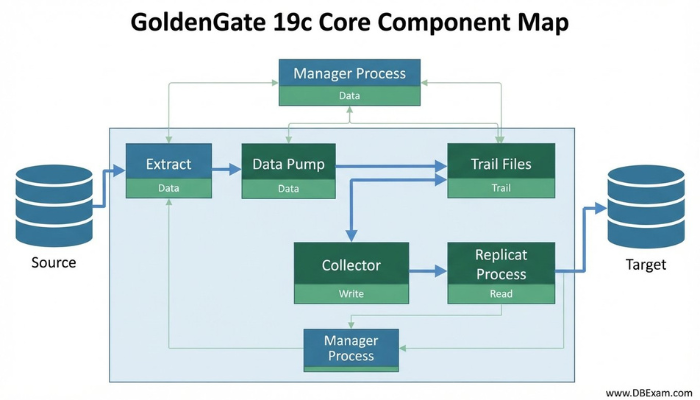
Oracle GoldenGate 19c stands as a cornerstone technology for enabling high-performance, real-time data replication and integration across heterogeneous systems. Professionals seeking the Oracle 1Z0-947 certification must grasp its architectural nuances and understand how to leverage its capabilities for diverse business needs. This includes mastering the GoldenGate 19c architecture and components, which are vital for building robust data replication solutions.
Core Components and Their Roles
A successful Oracle GoldenGate 19c implementation hinges on a clear understanding of its core components and how they interact. This knowledge forms the bedrock for troubleshooting and performance tuning.
Key components include:
-
Extract Process: This component captures committed transactions from the source database, reading directly from the transaction logs (redo logs). It's the first step in the replication pipeline, crucial for minimizing impact on the source system.
-
Data Pump: An optional but often recommended component, the Data Pump is a secondary Extract process that reads the local trail files produced by the primary Extract. It is responsible for filtering, transforming, and transferring data to the target system, enhancing flexibility and fault tolerance.
-
Trail Files: These are proprietary GoldenGate files that store the captured transactional data. They are platform-independent and contain the changes in a compact, efficient format. Local trails reside on the source, while remote trails are on the target system.
-
Collector: Running on the target system, the Collector process receives the trail files sent by the Data Pump. It writes the data to the target's remote trail files, acting as an intermediary before the Replicat process.
-
Replicat Process: This process applies the transactional data from the remote trail files to the target database. It ensures data consistency and integrity, completing the replication cycle by applying changes in the correct order.
-
Manager Process: A control process that runs on both the source and target systems. It is responsible for starting, stopping, monitoring, and managing all other GoldenGate processes. It also performs routine tasks like trail file maintenance and port management.
Understanding these components and their interactions is fundamental for any professional aiming to implement Oracle GoldenGate 19c successfully. It directly correlates to the ability to design, implement, and maintain Oracle GoldenGate 19c data replication solutions.
GoldenGate's Role in Modern IT Landscapes
Beyond the technical components, recognizing the strategic importance of Oracle GoldenGate 19c data replication solutions in contemporary IT environments is critical. It enables seamless data migration, disaster recovery, real-time reporting, and active-active database configurations. Such capabilities are indispensable for businesses requiring high availability and low latency data synchronization across complex systems, making expertise in GoldenGate highly valuable. Professionals equipped with this knowledge can provide substantial strategic value to organizations navigating the complexities of data integration and business continuity. Further exploration of general Oracle documentation can provide context for various deep linking mechanisms and configuration options within Oracle's ecosystem, broadening a candidate's overall Oracle knowledge. To get a wider perspective on Oracle's cloud offerings, you might find valuable insights on Oracle documentation.
Strategic Preparation for 1Z0-947 Success
Embarking on the journey to earn the Oracle GoldenGate 19c Implementation Professional certification requires a well-structured preparation strategy. Simply reviewing the syllabus is not enough; candidates need a comprehensive plan that includes study materials, practice, and hands-on experience. This section guides you on how to prepare for Oracle GoldenGate 19c exam effectively, enhancing your chances of success.
Crafting Your 1Z0-947 Exam Study Guide
Developing a personalized study guide tailored to your learning style and the exam objectives is crucial. Start by meticulously going through each topic listed in the Oracle 1Z0-947 exam objectives.
Consider the following steps:
-
Deconstruct the Syllabus: Break down each major syllabus topic into smaller, manageable sub-topics. For instance, "Install and Configure OGG" can be split into installation prerequisites, software download, parameter file creation, and initial process configuration.
-
Official Documentation Review: Oracle provides extensive documentation for GoldenGate 19c. This is your primary and most reliable source of information. Dive deep into the administration guide, reference guide, and installation guides. Pay close attention to configuration examples and command-line interfaces.
-
Hands-on Practice: Theoretical knowledge needs to be reinforced with practical application. Set up a lab environment (virtual machines, cloud instances) to install, configure, and manage GoldenGate 19c. Experiment with different topologies, parameters, and replication scenarios. Practical experience is invaluable for understanding Oracle GoldenGate 19c installation and configuration.
-
Community and Forums: Engage with the Oracle GoldenGate community. Forums, user groups, and online discussions can provide insights into common challenges, implementation best practices, and troubleshooting tips. Learning from others' experiences can highlight areas you might overlook.
-
Practice Questions: Utilize Oracle 1Z0-947 practice questions to gauge your understanding and identify weak areas. This helps simulate the actual exam environment and familiarizes you with the question formats. Regularly taking practice tests is a core component of your 1Z0-947 exam study guide. You can find comprehensive practice questions and detailed answers to help solidify your understanding and readiness for the exam at certification sample questions.
By integrating these elements into your study guide, you create a robust framework for systematic learning and retention.
Leveraging Practical Experience
Practical application of Oracle GoldenGate 19c implementation best practices is not just about passing the exam; it’s about becoming a proficient professional. Real-world scenarios expose you to the complexities of GoldenGate, from initial replication setup to advanced performance tuning.
Implementing GoldenGate 19c Replication Setups
Gaining hands-on experience with GoldenGate 19c replication setup is crucial. This involves:
-
Basic Unidirectional Replication: Start with a simple one-way replication from one database to another. This builds a foundational understanding of Extract, Data Pump, and Replicat processes.
-
Bidirectional Replication: Progress to more complex bidirectional setups, which introduce challenges like conflict detection and resolution. This is a common scenario in high-availability environments.
-
Heterogeneous Replication: Experiment with replicating data between different database types (e.g., Oracle to SQL Server or Oracle to Kafka). This broadens your understanding of GoldenGate’s versatility and configuration options.
-
Initial Load Techniques: Practice various initial load methods, which are essential when setting up replication for existing databases. Understanding when and how to use data pump or direct load methods is key.
These practical exercises provide invaluable insights into the intricacies of GoldenGate 19c. They prepare you not only for the exam but also for real-world implementation challenges. For broader insights into external URL configurations in Oracle's cloud services, consider exploring the detailed documentation on Oracle cloud documentation.
Overcoming Implementation Challenges with 1Z0-947 Knowledge
Implementing Oracle GoldenGate 19c can present various challenges, from installation hurdles to ongoing performance issues. The Oracle 1Z0-947 certification equips professionals with the knowledge to proactively address these common obstacles. A deep dive into Oracle GoldenGate 19c troubleshooting guide and effective implementation tips is essential for both exam preparation and practical success.
Addressing Common GoldenGate Installation and Configuration Issues
Installation and configuration are often the first points of potential difficulty. Understanding the typical pitfalls helps in efficient deployment.
Consider these common scenarios:
-
Environment Prerequisites: Many issues stem from unmet prerequisites, such as incorrect operating system patches, missing libraries, or improperly configured database parameters (e.g.,
ARCHIVELOGmode, supplemental logging). A thorough pre-installation checklist can mitigate these. -
Network Connectivity: GoldenGate processes communicate across networks. Firewall restrictions, incorrect port configurations, or DNS resolution issues can prevent components from interacting. Verifying network paths and port accessibility is critical.
-
User Permissions: The Oracle GoldenGate user requires specific database privileges for capturing and applying changes. Insufficient permissions can lead to Extract or Replicat failures. Always follow the principle of least privilege while ensuring necessary access.
-
Parameter File Errors: Syntax errors, incorrect path specifications, or logical inconsistencies in parameter files are frequent causes of process abends. Meticulous review and testing of parameter files (e.g., using ggsci param check) are vital.
-
Trail File Management: Issues with trail file locations, insufficient disk space, or incorrect retention policies can disrupt replication. Implementing robust monitoring and maintenance routines prevents these problems.
These implementation tips are crucial for smooth Oracle GoldenGate 19c installation and configuration. Proactive identification and resolution of these issues contribute significantly to a stable replication environment.
Strategies for Effective Troubleshooting
Even with best practices, problems can arise. An effective Oracle GoldenGate 19c troubleshooting guide involves a systematic approach to diagnosis and resolution.
Key strategies include:
-
Leverage GGSCI Commands: The GoldenGate Software Command Interface (GGSCI) is your primary tool. Commands like VIEW REPORT, INFO ALL, STATUS, LAG, and SHOW PARAM provide critical diagnostic information.
-
Analyze Report Files: Each GoldenGate process generates a report file detailing its startup, operations, and any encountered errors. These files are invaluable for identifying the root cause of issues.
-
Examine Discard Files: The Replicat process creates discard files for rows that fail to apply to the target database. Analyzing these files helps understand data-level issues or misconfigurations.
-
Database Logs: Check database alert logs, trace files, and AWR reports for related errors. GoldenGate issues often manifest as database problems or vice-versa.
-
Operating System Logs: Review system logs (e.g., syslog on Linux, Event Viewer on Windows) for OS-level issues like resource contention, disk I/O problems, or network errors affecting GoldenGate.
-
Use GoldenGate Monitor: For more complex environments, Oracle GoldenGate Monitor provides a centralized dashboard for real-time monitoring and alerting, simplifying the identification of performance bottlenecks or failures.
Mastering these troubleshooting techniques is a significant part of the Oracle GoldenGate 19c implementation professional's toolkit, ensuring reliable data replication solutions.
Sustaining GoldenGate Performance and Security
Beyond initial setup and troubleshooting, maintaining optimal performance and ensuring robust security are ongoing responsibilities for any professional working with Oracle GoldenGate 19c. The Oracle 1Z0-947 certification underscores the importance of these areas, preparing candidates to implement Oracle GoldenGate 19c security best practices and engage in effective Oracle GoldenGate 19c performance tuning.
Optimizing GoldenGate for Peak Performance
Achieving and sustaining high performance in GoldenGate 19c environments is crucial for meeting demanding business requirements for real-time data. Performance tuning involves a combination of configuration adjustments, system monitoring, and understanding data flow.
Areas to focus on include:
-
Batching and Transaction Size: Optimize GROUPTRANSOPS and COMMIT_MAX_ROWS parameters to balance transaction throughput with latency. Larger batch sizes can improve throughput but might increase latency.
-
Network Optimization: Ensure high bandwidth and low latency between source and target systems. Utilize
COMPRESSparameter for network efficiency, especially over WANs, but be mindful of CPU overhead. -
Disk I/O and Storage: GoldenGate processes are I/O intensive, especially with trail files. Ensure that disk subsystems (for both trail files and databases) are high-performing and properly configured (e.g., RAID, SSDs). Separate GoldenGate trail files onto dedicated fast storage if possible.
-
Parameter Tuning for Extract and Replicat: Fine-tune parameters like FETCHBATCHSIZE, MAX_TRANSACTION_SIZE, and BATCHSQL (for Replicat) based on the workload characteristics. Use CACHESIZE for Extract to optimize memory usage.
-
Supplemental Logging: Ensure only necessary supplemental logging is enabled at the database level. Over-logging can significantly impact source database performance.
-
Parallelism: Utilize parallel Replicat (PDB or non-PDB) for high-volume workloads to apply changes more efficiently on multi-core systems. Understanding when and how to implement parallelism is a key aspect of Oracle GoldenGate 19c performance tuning.
Regular monitoring with LAG command in GGSCI, report files, and GoldenGate Monitor helps identify bottlenecks and guide tuning efforts.
Implementing Robust GoldenGate Security Measures
Data replication involves sensitive information, making Oracle GoldenGate 19c security best practices a non-negotiable aspect of any implementation. Protecting data in transit and at rest, as well as securing access to GoldenGate components, is paramount.
Essential security considerations:
-
Secure Communications: Implement encryption for data in transit between GoldenGate components using SSL/TLS. This protects trail files during network transfer, especially when crossing untrusted networks.
-
Credential Management: Utilize credential store for secure storage of database login credentials for Extract and Replicat processes, rather than embedding them directly in parameter files.
-
Access Control: Restrict access to GoldenGate installation directories and GGSCI utility. Implement operating system-level permissions to ensure only authorized users can start, stop, or modify GoldenGate processes.
-
Database User Privileges: Grant the GoldenGate database user only the minimum necessary privileges (SELECT, INSERT, UPDATE, DELETE on specific tables, plus specific DDL privileges if required). Avoid granting DBA role.
-
Auditing: Implement auditing for GoldenGate activities and database changes applied by Replicat. This provides accountability and helps detect unauthorized access or modifications.
-
Data Filtering and Transformation: Use GoldenGate’s filtering and transformation capabilities to exclude sensitive columns or mask data before it reaches the target, if the target environment has lower security requirements or different compliance needs.
By diligently applying these Oracle GoldenGate 19c security best practices, organizations can ensure that their real-time data replication solutions are not only efficient but also secure against potential threats.
Boosting Career Prospects with GoldenGate Expertise
The Oracle GoldenGate 19c Implementation Professional certification, Oracle 1Z0-947, is more than just a piece of paper; it's a testament to a specialized skill set that is highly valued in today’s data-intensive world. Earning this credential can significantly impact your career trajectory, opening doors to new roles and responsibilities. Professionals who pass Oracle GoldenGate 19c Professional exam are positioned for substantial career growth and enhanced job security.
Unlocking New Job Roles and Opportunities
Possessing the 1Z0-947 certification signals to employers that you have a verified understanding of Oracle GoldenGate 19c architecture and components, and the practical skills to implement and manage complex data replication projects. This can lead to various exciting career paths:
-
Database Administrator (DBA) specializing in Replication: Many organizations need DBAs with expertise in high availability and disaster recovery solutions, making GoldenGate specialists highly sought after.
-
Data Migration Specialist: With businesses frequently undergoing platform upgrades or cloud migrations, GoldenGate skills are critical for ensuring seamless, zero-downtime data transfers.
-
Real-time Data Integration Engineer: As demand for real-time analytics grows, professionals who can set up and manage continuous data feeds between operational systems and data warehouses are invaluable.
-
Solution Architect for Data Platforms: Architects with GoldenGate expertise can design robust, scalable data architectures that leverage real-time data movement for various business applications.
-
Technical Consultant: Independent consultants or those working for consulting firms often need broad expertise, and GoldenGate skills are a major asset when advising clients on data strategy and implementation.
The certification not only enhances your current role but also prepares you for these advanced and specialized positions, offering a fresh start or significant upward mobility in your career.
The Value of Oracle Certifications
Oracle certifications, including the Oracle 1Z0-947, are globally recognized and respected within the IT industry. They represent a commitment to professional development and a mastery of Oracle technologies. Employers often prioritize certified professionals, viewing them as more competent and reliable.
The benefits extend beyond individual job prospects:
-
Enhanced Credibility: A certification acts as a third-party validation of your skills, giving you an edge over uncertified peers.
-
Increased Earning Potential: Certified professionals often command higher salaries due to their specialized and proven expertise.
-
Access to a Professional Network: Being part of the Oracle certified community can open doors to networking opportunities, knowledge sharing, and staying updated with industry trends.
-
Confidence in Complex Projects: The rigorous preparation for the 1Z0-947 exam instills the confidence needed to tackle challenging GoldenGate implementation projects with assurance.
Investing in the Oracle GoldenGate 19c certification path is an investment in your professional future, providing the tools and recognition needed to thrive in a dynamic tech landscape. Explore more Oracle certification paths and resources to continually enhance your professional toolkit and career options. Visit Oracle exam resources for further information on available certifications.
Conclusion
The Oracle 1Z0-947, Oracle GoldenGate 19c Implementation Professional certification, offers a transformative opportunity for IT professionals seeking to elevate their careers. It validates critical skills in real-time data replication, integration, and migration—areas that are increasingly vital for modern enterprises. By systematically preparing for the exam, leveraging comprehensive study materials, engaging in hands-on practice, and understanding both the technical nuances and strategic value of GoldenGate 19c, you can not only pass the Oracle GoldenGate 19c Professional exam but also position yourself for significant career advancement.
If you find yourself at a crossroads in your career, feeling stuck, or simply looking to specialize in a highly sought-after technology, the Oracle 1Z0-947 certification provides a clear and rewarding path. Take this as your cue for a fresh start, to acquire a valuable credential, and to unlock a new realm of professional possibilities. Begin your preparation today and commit to mastering Oracle GoldenGate 19c.
FAQs
1. What is the Oracle 1Z0-947 exam about?
The Oracle 1Z0-947 exam, or Oracle GoldenGate 19c Implementation Professional, certifies an individual's expertise in deploying, configuring, and managing Oracle GoldenGate 19c for real-time data replication and integration across various database systems.
2. Who should consider taking the Oracle 1Z0-947 certification?
This certification is ideal for database administrators, data architects, technical consultants, and IT professionals who work with or aspire to work with Oracle GoldenGate 19c solutions for data migration, disaster recovery, or real-time analytics.
3. How long does it typically take to prepare for the 1Z0-947 exam?
Preparation time varies greatly depending on an individual's existing experience with Oracle databases and GoldenGate. Typically, candidates with some experience may need 2-4 months of dedicated study and hands-on practice, while beginners might require longer.
4. What kind of job roles does the Oracle 1Z0-947 certification qualify me for?
Achieving this certification can open doors to specialized roles such as Oracle GoldenGate Administrator, Data Replication Engineer, Real-time Data Integration Specialist, or Database Administrator with a focus on high availability and migration.
5. Is hands-on experience crucial for passing the Oracle 1Z0-947 exam?
Yes, hands-on experience is highly recommended and often crucial. The exam assesses practical implementation knowledge, troubleshooting, and configuration scenarios. Theoretical understanding alone is often insufficient for achieving a passing score.
- Oracle GoldenGate |
- 1Z0-947 |
- Oracle 1Z0-947 Questions and Answers |
- Oracle GoldenGate 19c Implementation Certified Professional |
- 1Z0-947 Study Guide |
- 1Z0-947 Practice Test |
- Oracle GoldenGate Implementation Professional Certification Questions |
- 1Z0-947 Sample Questions |
- 1Z0-947 Simulator |
- Oracle GoldenGate Implementation Professional Online Exam |
- Oracle GoldenGate 19c Implementation Professional |
- 1Z0-947 Certification |
- GoldenGate Implementation Professional Exam Questions |
- GoldenGate Implementation Professional |
- 1Z0-947 Study Guide PDF |
- 1Z0-947 Online Practice Test |
- Oracle GoldenGate 19c Mock Test |
- 1Z0-947 Test Questions |
- 1Z0-947 Exam Guide |
- 1Z0-947 Study Material |
- 1Z0-947 Syllabus |
- Oracle GoldenGate 19c Implementation Professional Syllabus |
- Oracle GoldenGate Implementation Professional Prep Guide |
- 1Z0-947 Certification Exam Cost


